A research paper outline is a short plan that shows the main point of each section before you start writing. It lists your topic, your key ideas, and the order in which you will present them. With a clear outline, you can see gaps in your argument early and avoid long, unfocused drafts. This guide explains the standard structure, compares two common formats, and gives a full example you can adapt.
In This Guide
Why an Outline Saves Time
Many students start writing without a plan and then get stuck halfway through. An outline helps you avoid that problem because it forces you to decide what matters most before you write full sentences.
Plan Before You Write
When you outline first, you choose your main claim and the points that support it. You can then check whether each point is clear, relevant, and backed by evidence. This step is much faster than rewriting whole pages later.
Find Gaps Early
An outline makes missing links easy to spot. If one section has no evidence, or if two sections repeat the same idea, you will see it at a glance. You can fix the plan in minutes instead of reworking a finished draft.
Stay Focused While Drafting
Writing is easier when each section has one job. If you know what a section must prove, you are less likely to drift into side topics. That focus also helps you keep the paper short, clear, and easy to follow.
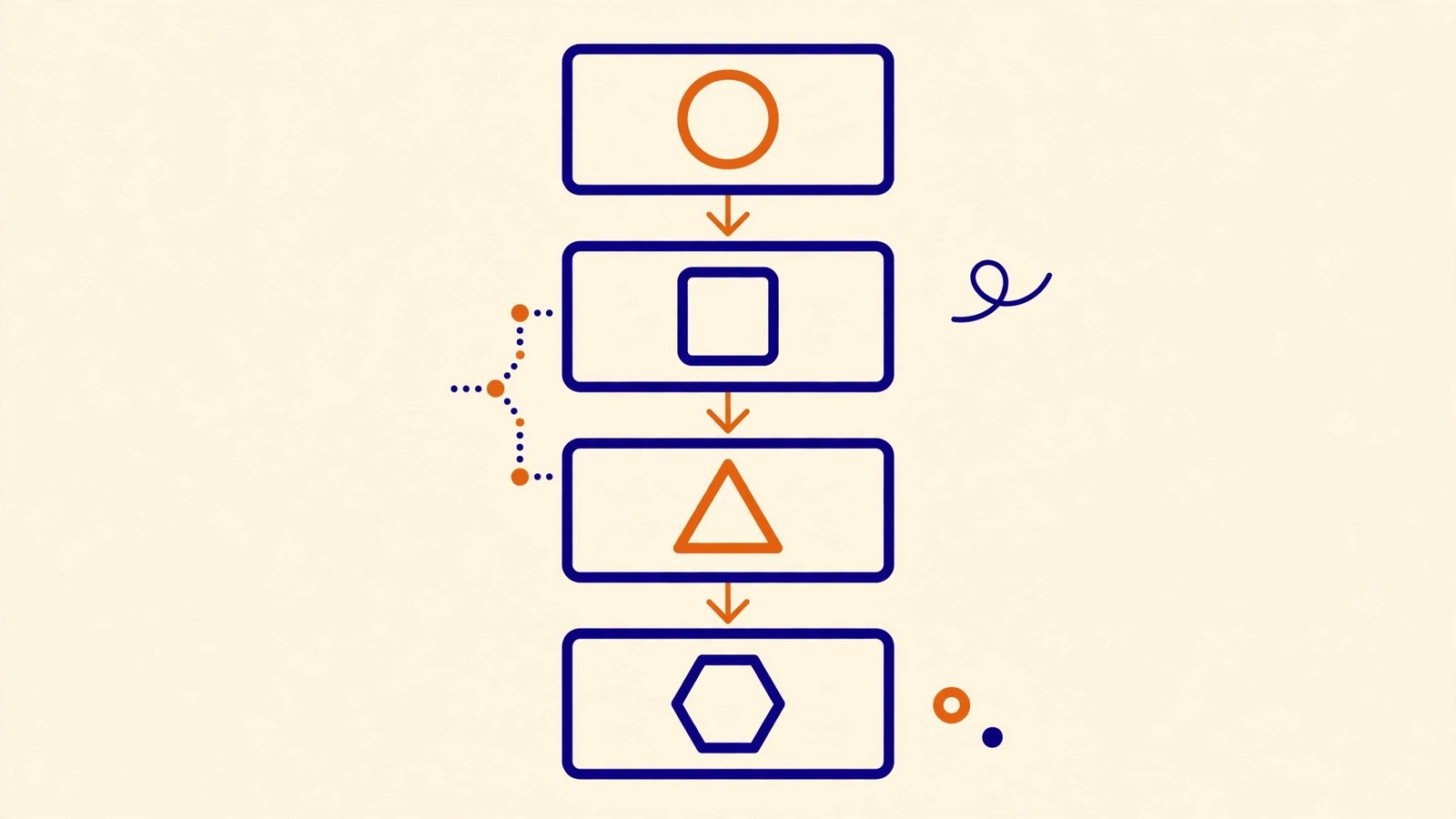
The Standard Structure: IMRaD
Most research papers follow the IMRaD structure: Introduction, Methods, Results, and Discussion. An abstract usually comes first, and references and appendices are added where needed. The same basic order also helps when you plan a longer project, as explained in this guide to dissertation structure.
Introduction
The introduction explains the topic, the problem, and why it matters. It gives brief background, states the research question, and ends with a clear aim. Keep it focused. Do not try to review every study on the topic here.
Methods
The methods section explains how the study was done, in enough detail for a reader to understand the process. It may cover the sample, tools, steps, and how data were checked. Clear methods build trust because the reader can see how the results were reached.
Results
The results section presents what was found, without adding opinion or long explanations. Use simple tables or figures only when they make the findings clearer. Each result should connect back to the research question from the introduction.
Discussion
The discussion explains what the results mean. It compares the findings with earlier work, notes limits, and suggests what should happen next. This is also the place to explain results that were unclear or unexpected, in a fair and careful way.
For more general advice on planning and drafting a long academic paper, see this guide on how to write a dissertation. Purdue OWL also offers trusted guidance on organizing academic writing: https://owl.purdue.edu/
Alphanumeric vs Decimal Outlines
There are two common outline formats. Both work well. The best choice is the one you find easiest to read and update.
Alphanumeric Outlines
Alphanumeric outlines use letters and numbers in levels, such as I, A, 1, and a. Roman numerals mark the main sections, capital letters mark sub-points, and numbers mark details. This format is simple and works well for short papers.
Decimal Outlines
Decimal outlines use numbers with dots, such as 1, 1.1, and 1.1.1. Each dot adds a deeper level of detail. This format is useful for long papers because it shows the exact place of each point in the structure. It also makes it easy to move a section without losing track of the order.
Choose one format and use it through the whole outline. Mixing formats can make the plan hard to follow. If your research changes, update the outline first, then change the draft to match it.
Full Example Outline
The outline below is an example only. It is not a real study. It uses a simple topic, the effect of sleep on student grades, to show how each part of a paper fits together. You can copy the shape of this outline and replace the topic with your own.
The Example Topic
The sample question is: Do students who sleep longer get higher grades? The outline keeps each section focused on one main idea, so the reader can follow the argument from start to finish.
Title: The Effect of Sleep on Student Grades
- Abstract: A short summary of the question, method, key result, and main conclusion.
- Introduction
- 2.1 Background: Why sleep may affect learning and memory.
- 2.2 Problem: Many students sleep less than they need during term time.
- 2.3 Research question: Does longer sleep link to higher grades?
- 2.4 Aim: To test the link between sleep length and grades.
- Methods
- 3.1 Sample: A group of college students who agree to take part.
- 3.2 Data: Sleep logs and grade records for one term.
- 3.3 Analysis: A simple comparison of sleep length and average grades.
- Results
- 4.1 Main finding: Students with longer sleep had higher average grades.
- 4.2 Supporting detail: The pattern held across most subjects.
- Discussion
- 5.1 Meaning: Sleep may support focus, memory, and study habits.
- 5.2 Limits: Sleep logs rely on self-report, and other factors may affect grades.
- 5.3 Next steps: A larger study with more students and more terms.
- References: A full list of sources cited in the paper.
- Appendix: Extra tables or forms, only if needed.
When you write your abstract, keep it short and clear. For step-by-step help, see how to write an abstract for a research paper.
Common Mistakes to Avoid
Too Much Detail Too Soon
Some outlines turn into full drafts. That defeats the purpose. Keep each point to one short line or phrase, and save full sentences for the draft itself.
One Section Doing Too Much
If a section covers three different ideas, split it. Each section should focus on one main idea, with clear sub-points beneath it. This rule keeps both the outline and the final paper easy to read.
A Fixed Plan That Never Changes
An outline should come before drafting, but it should not stay frozen. As your research develops, you may find new evidence or a stronger order. Update the outline, check that the parts still fit, and then keep writing.
Frequently Asked Questions
What is a research paper outline?
A research paper outline is a plan that lists the main point of each section in order before drafting begins.
When should I write an outline?
Write an outline before you draft, and update it as your research develops or your argument changes.
What does IMRaD stand for?
IMRaD stands for Introduction, Methods, Results, and Discussion, the standard order for most research papers.
Should I use an alphanumeric or decimal outline?
Use either format, but use it consistently, since both show the same structure in a different style.
How detailed should an outline be?
An outline should be detailed enough to guide drafting, with one main idea per section and short sub-points beneath it.
Stuck on Your Research Paper Outline?
If your outline feels unclear or your sections do not fit together, expert guidance can help you get back on track. Get help with planning your structure, shaping your argument, and editing your draft for clarity. Support is focused on guidance, structure help, and editing support for your own work.
Research Paper Help — Expert guidance, structure help, and editing support for research papers.
You can also check the price with the free calculator on the service page.
About the Author
The Dissertation Writing Services USA research team is made up of PhD-level researchers and academic editors who help US students plan, structure and polish their dissertations. They focus on clear structure, sound argument, and careful editing.