Learning how to write the methodology chapter is easier once you know its job: explaining how you carried out your research so readers can judge whether your findings are sound.
A strong chapter describes what you did, explains why, and gives enough detail for another researcher to repeat the study.
This guide covers the standard sections and how to justify each choice, as part of how to write a dissertation and the overall dissertation structure.
In This Guide
What Is the Methodology Chapter?
This chapter explains your research plan in action: how you set out to answer your research questions.
What It Does
It tells readers which approach you chose, who took part, what tools you used, and how you studied the results, plus the ethical steps and limits. Each part should link back to your research questions.
What It Does Not Do
It does not present findings; results belong in a later chapter. It also does not repeat your review of past research. The focus stays on your own study.
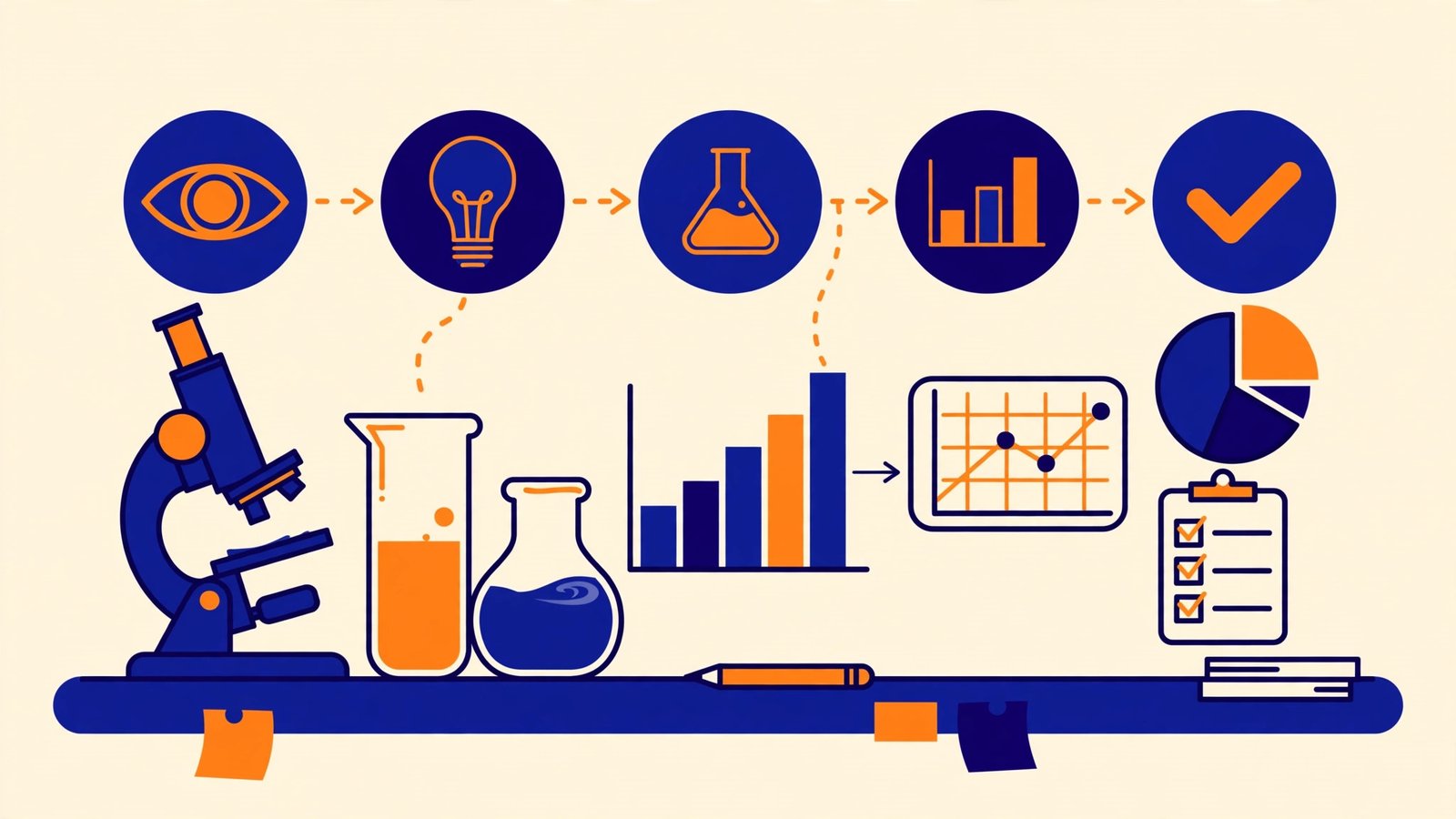
The 7 Standard Sections of a Methodology Chapter
Most chapters follow this order, though exact headings vary by university and field, so check your program guide first.
1. Research Design
Start by naming your overall design — a survey, experiment, case study, or interviews — and whether your approach was qualitative, quantitative, or mixed.
If you are still choosing, reading about qualitative vs quantitative methodology can help. In your chapter, commit to one approach and explain why it suits your questions best.
2. Participants and Sample
Describe who took part: how many people or cases, how you chose them, and their key shared traits. Were they picked at random, or because they had direct experience of the topic?
Also explain who was left out and why, so readers can judge how far your findings apply.
3. Instruments and Data Collection Tools
Instruments are your data-gathering tools, such as a questionnaire or interview guide. Name each tool, say where it came from, and explain why you chose it.
If you built your own questions, say how. If you used an existing tool, note why it fits. Small details matter, such as the number of questions and the kind of answers allowed.
4. Procedure
The procedure is the step-by-step account of what happened, from first contact to the end of data collection. Say where it took place, how long each step took, and how you recorded the data.
Write it like clear instructions another researcher could follow. If something changed during the study, say so honestly and explain why.
5. Analysis Method
Explain how you studied the data. For numbers, name the analysis type and why it fits your questions. For words, such as interview transcripts, explain how you sorted them into themes or patterns.
Do not just name a method. Explain your steps, in order, and how you checked your work.
6. Ethics
Explain how you gained approval, asked for consent, and protected privacy, including safe data storage and removal of identifying details.
If no people took part directly, ethics still matter: permission for existing data, care with sensitive records, and honest reporting. When in doubt, ask your supervisor.
7. Limitations
End with an honest account of the limits. Perhaps your sample was small or one tool underperformed. Name these limits plainly and explain how they might affect your findings.
This is not a weakness. It shows you understand your study and report it honestly, which builds reader trust.
The Golden Rule: Justify Every Choice
The most common weakness is actions with no reasons. Examiners want to know why you chose this way over the alternatives.
Why This Design?
Link each choice back to your research questions. If you chose interviews, explain why spoken accounts answer your question better than numbers would.
Why This Sample?
Explain why your group fits the question — for example, why new teachers’ fresh experience matters, or why depth mattered more than size in a small group.
Why This Analysis?
Your analysis must match your data and questions. Explain the match in plain words, and say why a simpler method would not have done the job as well.
Writing Style Rules That Examiners Expect
Good method writing is clear and direct. You do not need complex language to sound academic, and simple writing makes your method easier to judge.
Write in the Past Tense
Your study has already happened, so use the past tense: “participants completed a questionnaire.” A research proposal uses the future tense, but the finished chapter does not.
Give Enough Detail to Replicate the Study
Ask as you write: could another researcher repeat my study from this chapter alone? If not, add the missing detail. Leave out only details that would identify participants.
Keep Sentences Short and Headings Clear
Use short paragraphs and plain words, one idea per paragraph. Clear headings help, since examiners return to this chapter when checking results. For extra help, the UNC Writing Center offers free, trusted advice on academic writing.
Common Mistakes to Avoid
Listing Actions Without Reasons
A chapter that only says “a survey was used” leaves readers guessing. Add a reason for every major choice, or discuss it with your supervisor.
Mixing Methods and Results
Do not slip findings into this chapter. Keep results in the results chapter. Mixing the two weakens both chapters.
Being Vague About Key Details
Vague phrases such as “some participants” do not give readers enough to work with. Name the numbers, tools, and steps wherever you can, and explain any gap rather than leaving it silent.
Copying a Template Without Adapting It
Learning from examples is fine, but your chapter must describe your own study. Adapt every section to what you actually did.
A Simple Checklist Before You Submit
Use this checklist as a final pass. The same checks work for shorter projects that draw on research paper help resources.
Does Each Section Answer “What” and “Why”?
Check that each section states both what you did and why. If a section only lists actions, add the reasons.
Could Someone Else Repeat Your Study?
Read the procedure and analysis sections as if you were a stranger, and ask a peer to read them too. A fresh reader often spots gaps the writer can no longer see.
Have You Checked Your University Guide?
Exact expectations vary by university and field. Check your guide for required headings, word limits, and ethics forms, and follow it over any general guide.
Frequently Asked Questions
How long should the methodology chapter be?
There is no single correct length, because expectations vary by university, field, and degree level. It should be long enough to describe every step clearly and justify each major choice. Check your program guide for any word limit.
Should the methodology chapter be written in the past tense?
Yes, in most cases. The finished chapter reports a study that has already taken place, so the past tense is normal. A research proposal describes work not yet done, so it uses the future tense instead.
What is the difference between methodology and methods?
Methodology is the overall approach and reasoning behind it, such as why a study uses interviews rather than a survey. Methods are the specific tools and steps, such as the interview guide and analysis steps. In short, methodology explains the thinking, and methods describe the doing.
Do I need an ethics section if my study does not involve people?
Yes, even if no people took part directly. You may need to cover permission to use existing data, care with sensitive records, and safe data storage. Check your university rules, because requirements vary.
How much detail should I give about my sample?
Give enough detail for readers to judge who took part and how far findings may apply: how participants were chosen, how many took part, and their key shared traits, without revealing identifying details. Explain sample limits honestly.
Methodology Chapter Giving You Trouble? Get Expert Help
If your methodology chapter feels unclear, expert guidance can help you shape it with confidence. Get support with planning your design, structuring each section, and editing your draft for clarity and flow.
You can also get help checking that every choice is justified and that your chapter gives enough detail for another researcher to follow your study.
- Dissertation Help — Expert guidance, structure help, and editing support for your full dissertation.
- Research Paper Help — Expert guidance, structure help, and editing support for research papers and related chapters.
You can check the price with the free calculator on the service page before you decide.
About the Author
The Dissertation Writing Services USA research team is made up of PhD-level researchers and academic editors who help US students plan, structure and polish their dissertations. The team focuses on clear structure, honest guidance, and careful editing support for students at every stage of the dissertation process.